

• A
  • A
  • A
  • ABC
  • ABC
  • ABC
  • А
  • А
  • А
  • А
  • А
Regular version of the site
Article
Proglacial successions of springtail assemblages (Collembola) along retreating glaciers in Kabardino-Balkaria, Greater Caucasus, Russia

Antipova M. D., Irina S. Bushueva, Babenko A. B.

Nature conservation research. Zapovednaâ nauka. 2026. Vol. 11. No. 1. P. 71-92.

Book chapter
Thermodynamic Properties of Landscape Cover

Robert Sandlersky.

In bk.: Reference Module in Earth Systems and Environmental Sciences. Oxford: Elsevier, 2025. P. 1-11.

Working paper
The ‘Pivot to the East‘ and China in Russian Discourse

Колосов В. А., Zotova M.

Published online. 10.1080/14650045.2021.1952184. Taylor and Francis, 2021

HSE Development Programme until 2030 – News

Boreal wetlands: new evidence on who stores carbon dioxide and who emis it

Staroselsky Moss - raised bog, August 2012
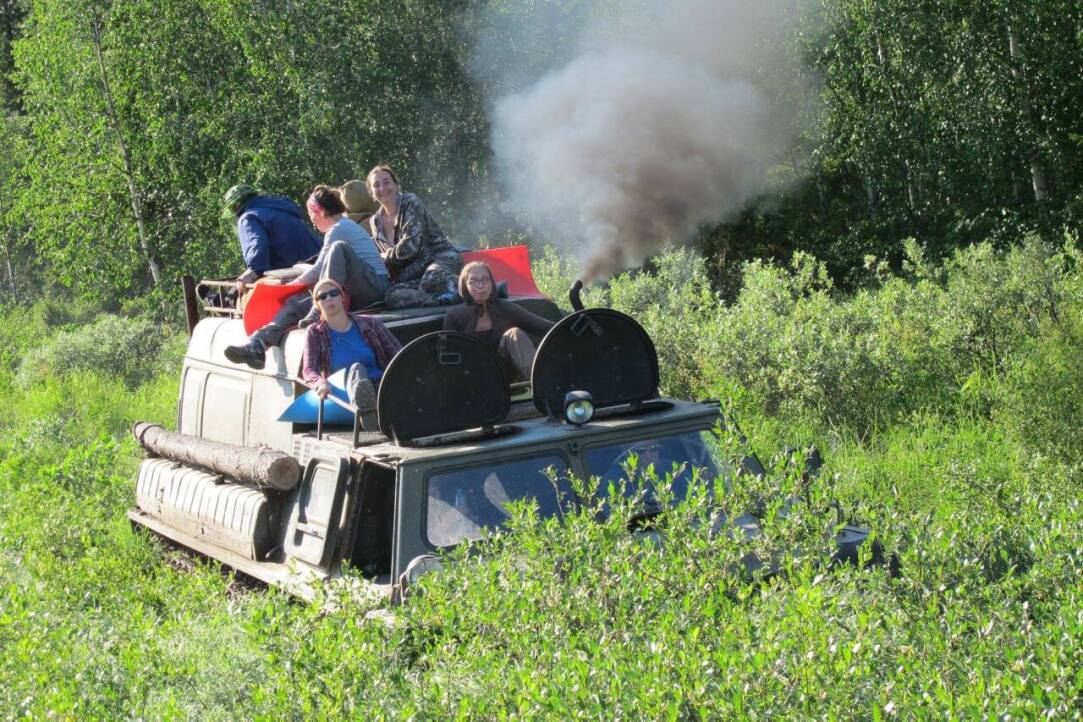
Researchers of the International Laboratory of Landscape Ecology took part in a major multi-institutional study of the carbon balance of Russia’s taiga peatlands

HSE University and SAFC Launch Cooperation on Nature and Climate Projects in Kazakhstan

Yuri Kim (second left), Victor Proskuryakov (far right)
The Сentre of Digital Technologies for Nature-Based Solutions at HSE University and the Kazakhstan-based company SAFC are planning joint work on the implementation of climate projects in Kazakhstan. Specialists from the HSE centre visited the site of the country’s first forest climate project and signed a cooperation agreement with SAFC.

A Russian-American team of researchers used convolutional neural networks to study high-resolution satellite images of three Siberian landscapes taken at intervals of 10-15 years

Russian coauthors research A. Derkacheva and K. Ermokhina (in the foreground) on their way to the fieldwork site, near Harp, 2018
The neural network analysed nearly a million 12×12 m plots and found that the rate of shrub spread varies from 2.4% to 26.1% per decade, depending on local conditions. The study showed that mature shrubs prefer well-drained slopes, while new colonisation occurs on flatter areas, which opens up opportunities for predicting further shrubification of the Arctic under climate change conditions